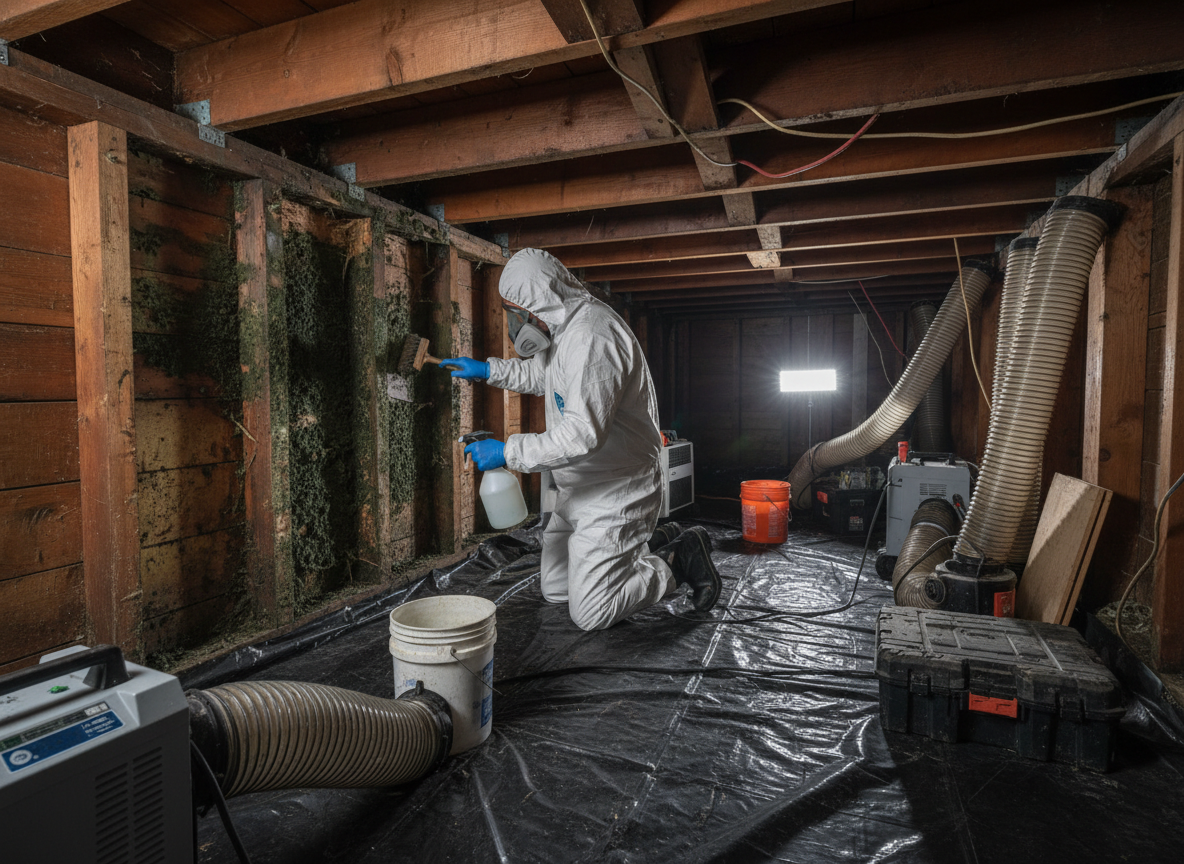
Twin Peaks homes often sit on sloped lots with crawl spaces that collect runoff from melting snow each spring. Older wooden foundations common in the area trap humidity against soil that stays damp well into summer. Removing mold here requires sealing off the space from living areas first, then using negative air machines to pull spores away from the structure before any physical cleaning begins.
Access is frequently limited by low clearance and uneven terrain typical around Crestline and Lake Arrowhead roads. Technicians must work around plumbing, electrical lines, and insulation that has already absorbed moisture. In these conditions, simply spraying surfaces leaves hidden growth in joist ends and rim boards; full removal means physically scrubbing and treating every accessible surface while monitoring humidity levels to prevent immediate regrowth.
After cleaning, ventilation upgrades are essential because the mountain climate swings from cold, snowy winters to warm, humid summers. Adding proper vents and vapor barriers stops the cycle of condensation that returns mold within a single season. Homeowners should expect follow-up checks after the first heavy snowmelt to confirm the space stays dry.
Technician insight
In Twin Peaks the thing that catches most people out with crawl space mold removal is spring snowmelt running down the slopes and pooling against older pier-and-beam foundations near the 189 corridor. Homeowners often seal the vents thinking it will keep the space warmer, but that traps the moisture that returns every winter.
Slope Drainage Failure on a Twin Peaks Hillside Lot
Heavy spring runoff from the ridge above the property had soaked the soil under a 1960s cabin. Mold had spread across the subfloor and into the rim joists. We contained the space, removed the wet insulation, scrubbed and treated all wood, then installed a sealed vapor barrier with improved perimeter drainage to handle future melt.
How it works
- 1
Initial Assessment
Technicians enter the crawl space to map moisture sources, note insulation condition, and identify mold extent on joists and subflooring.
- 2
Containment Setup
Plastic sheeting and negative air machines isolate the crawl space from the rest of the home to keep spores from migrating into living areas.
- 3
Physical Removal
Mold is scrubbed from wood surfaces, affected insulation is removed, and remaining areas receive antimicrobial treatment suited to mountain humidity levels.
- 4
Drying and Barrier Installation
Dehumidifiers dry the space, then a vapor barrier is laid over soil and new vents are added to handle seasonal snowmelt runoff.
Pricing
Pricing varies with crawl space size, access difficulty on sloped lots, and how much insulation must be replaced.