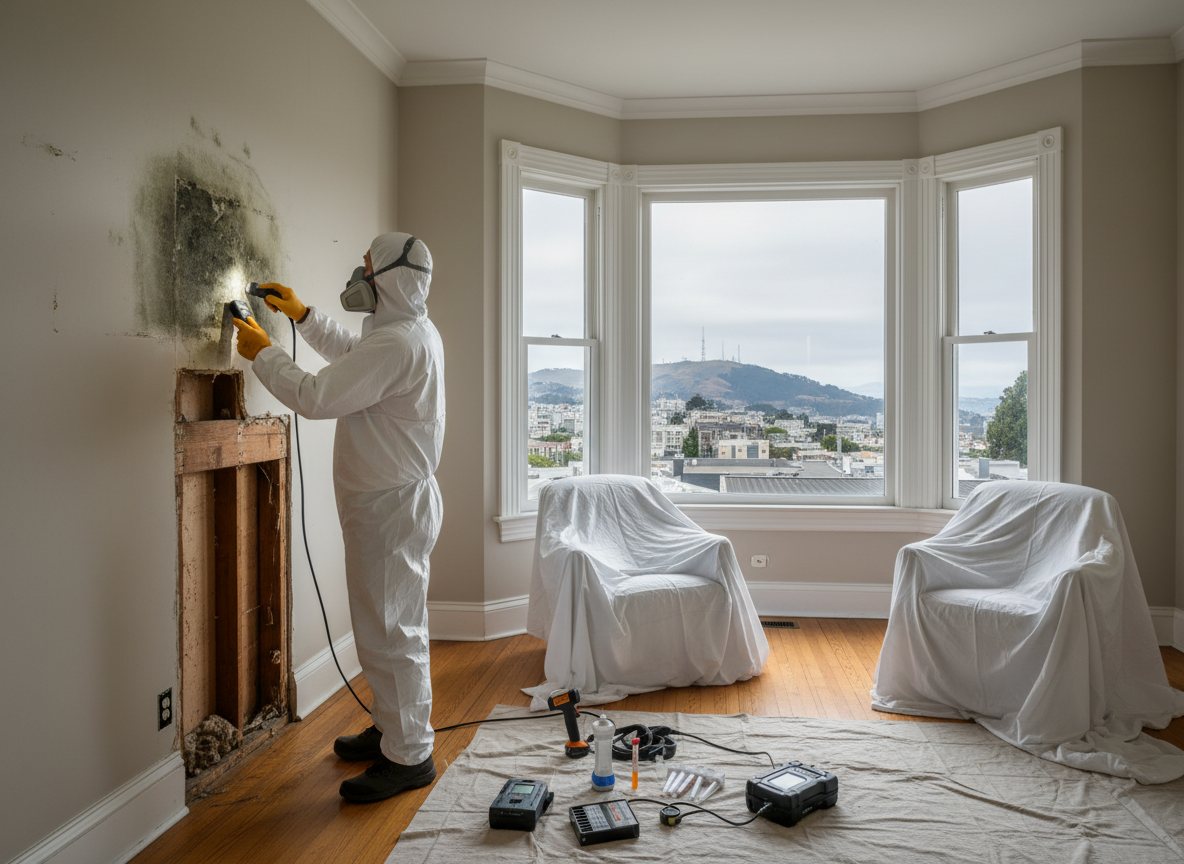
Twin Peaks sits at elevation in San Bernardino County where winter snowpack melts into crawl spaces and attics of older cabins and A-frame homes along Highway 189. A proper inspection starts with a moisture meter sweep of rim joists, subflooring, and roof sheathing, then moves to thermal imaging behind knotty-pine paneling that hides leaks from ice dams. Homeowners often miss black mold growing on the north-facing side of the house where shade keeps siding damp long after storms pass.
We check every bathroom exhaust fan termination, especially those venting into unconditioned attic spaces common in Crestline and Lake Arrowhead properties. In summer, warm humid air from Lake Arrowhead can condense on cooler concrete slabs in Twin Peaks basements, so we always test slab edges and underlayment. Edge cases include mold behind built-in bookcases in 1960s homes where previous owners added insulation without vapor barriers.
Inspections include written findings with photos and moisture readings that local contractors and insurers accept. We flag areas where remediation would require permits from San Bernardino County and note when a simple surface cleaning will not address the source. The goal is a clear map of what needs fixing before any removal work begins.
Technician insight
In Twin Peaks the thing that catches most people out with home mold inspection is snow melt running under the skirt boards of older cabins built on slopes. Homeowners check the obvious ceiling stains but miss the water that travels along the downhill rim joist and soaks the subfloor from below.
Hidden Crawlspace Moisture After Heavy Snow
A Twin Peaks homeowner noticed a musty smell after the first big melt of the season. We found standing water along the north foundation wall where the lot slopes toward the highway. Moisture readings exceeded 20 percent in the subfloor joists. We mapped the affected area, advised on grading fixes, and gave the owner a report they could hand to a remediation crew.
How it works
- 1
Initial Walk-Through
We review the home's history with the owner, noting any past roof leaks or winter flooding common in Twin Peaks.
- 2
Moisture and Thermal Scan
Meter readings and infrared imaging cover attics, crawl spaces, and exterior walls where snow melt collects.
- 3
Air and Surface Sampling
Samples are taken only from suspect areas and sent to a lab for species identification.
- 4
Detailed Report Delivery
Findings include location maps, moisture levels, and prioritized next steps for Twin Peaks properties.
Pricing
Pricing varies by square footage, number of stories, and access to crawl spaces and attics typical in Twin Peaks homes.